

What is the heat transfer coefficient of Vapour Chambers?
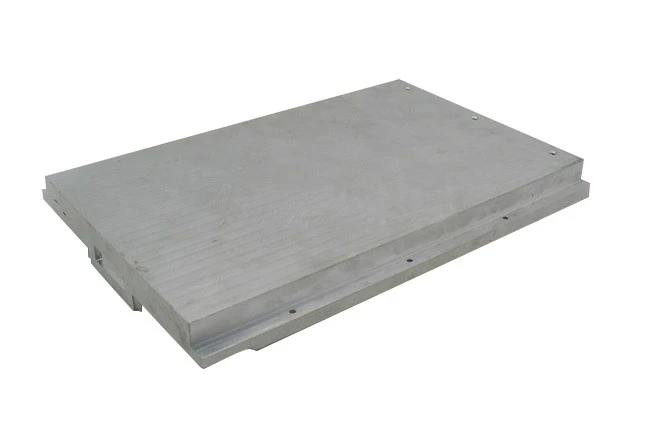

As a supplier of Vapour Chambers, I often encounter questions from customers regarding the heat transfer coefficient of these remarkable thermal management devices. Understanding this crucial parameter is essential for evaluating the performance of Vapour Chambers and making informed decisions when it comes to thermal solutions. In this blog post, I will delve into the concept of the heat transfer coefficient of Vapour Chambers, exploring its significance, influencing factors, and how it relates to the overall performance of our products.
Understanding the Heat Transfer Coefficient
The heat transfer coefficient, denoted as h, is a measure of the ability of a material or device to transfer heat between a solid surface and a fluid (in the case of Vapour Chambers, the fluid is typically a working fluid in its vapor and liquid phases). It is defined as the rate of heat transfer per unit area and per unit temperature difference between the surface and the fluid. Mathematically, it can be expressed as:
$q = h \cdot A \cdot \Delta T$
Where:
- $q$ is the heat transfer rate (in watts, W)
- $h$ is the heat transfer coefficient (in W/(m²·K))
- $A$ is the surface area (in square meters, m²)
- $\Delta T$ is the temperature difference between the surface and the fluid (in Kelvin, K)
In the context of Vapour Chambers, the heat transfer coefficient plays a vital role in determining how efficiently heat can be transferred from a heat source (such as a high - power electronic component) to the surrounding environment. A higher heat transfer coefficient means that more heat can be transferred for a given temperature difference and surface area, resulting in better thermal performance.
Factors Affecting the Heat Transfer Coefficient of Vapour Chambers
Several factors can influence the heat transfer coefficient of Vapour Chambers. Let's take a closer look at some of the most significant ones:
Working Fluid
The choice of working fluid is crucial as it directly affects the phase - change process within the Vapour Chamber. Different working fluids have different latent heats of vaporization and thermal conductivities. For example, water is a commonly used working fluid due to its high latent heat of vaporization and good thermal properties. When the working fluid absorbs heat from the heat source, it evaporates, carrying the heat away from the source. The vapor then travels to the cooler regions of the Vapour Chamber, where it condenses and releases the heat. The efficiency of this phase - change process is closely related to the heat transfer coefficient.
Wick Structure
The wick structure inside the Vapour Chamber is responsible for transporting the condensed liquid back to the evaporation area. A well - designed wick structure can enhance the liquid return rate and improve the overall heat transfer performance. There are various types of wick structures, such as sintered powder wicks, grooved wicks, and fiber wicks. Each type has its own advantages and disadvantages in terms of capillary force, permeability, and manufacturing complexity. A wick with high capillary force can ensure a continuous supply of liquid to the evaporation area, thereby increasing the heat transfer coefficient.
Chamber Design
The size, shape, and internal structure of the Vapour Chamber also have a significant impact on the heat transfer coefficient. A larger surface area provides more space for heat transfer, which can increase the overall heat transfer rate. Additionally, the design of the vapor flow channels inside the chamber can affect the vapor flow resistance and distribution. An optimized chamber design can minimize the vapor flow resistance and ensure uniform heat transfer across the entire surface of the Vapour Chamber.
Operating Conditions
The operating temperature and pressure of the Vapour Chamber can also influence the heat transfer coefficient. As the temperature and pressure change, the physical properties of the working fluid, such as its density, viscosity, and latent heat of vaporization, will also change. These changes can affect the phase - change process and the heat transfer performance. For example, at higher temperatures, the vapor pressure of the working fluid increases, which can lead to a higher vapor flow rate and potentially a higher heat transfer coefficient.
Measuring the Heat Transfer Coefficient of Vapour Chambers
Measuring the heat transfer coefficient of Vapour Chambers is a complex process that typically involves specialized equipment and techniques. One common method is to use a thermal test platform, which consists of a heat source, a temperature sensor, and a power supply. The heat source is used to generate a known amount of heat, and the temperature sensor is used to measure the temperature difference between the heat source and the Vapour Chamber. By measuring the heat transfer rate and the temperature difference, the heat transfer coefficient can be calculated using the formula mentioned earlier.
Another approach is to use numerical simulation software, such as computational fluid dynamics (CFD) software. CFD simulations can provide detailed information about the fluid flow and heat transfer processes inside the Vapour Chamber. By inputting the physical properties of the working fluid, the geometry of the Vapour Chamber, and the operating conditions into the simulation model, the heat transfer coefficient can be predicted. However, it is important to note that the accuracy of the simulation results depends on the quality of the input data and the validation of the simulation model.
Importance of the Heat Transfer Coefficient in Vapour Chamber Applications
The heat transfer coefficient is a critical parameter in various applications where Vapour Chambers are used. In the field of electronics cooling, for example, high - power electronic components such as CPUs and GPUs generate a large amount of heat during operation. If this heat is not dissipated effectively, it can lead to overheating, which can reduce the performance and lifespan of the components. Vapour Chambers with high heat transfer coefficients can efficiently transfer the heat away from the components, ensuring their stable operation.
In the aerospace and automotive industries, Vapour Chambers are also used for thermal management. In aerospace applications, they can help to cool electronic systems in aircraft and satellites, where weight and space are critical factors. In automotive applications, Vapour Chambers can be used to cool power electronics in electric vehicles, improving the efficiency and reliability of the vehicles.
Our Vapour Chamber Products and Their Heat Transfer Performance
At our company, we offer a wide range of Vapour Chamber products with excellent heat transfer performance. Our Multi - chambered Aluminum Heat Sink Vapor Chamber is designed with multiple chambers to enhance the vapor flow and heat transfer efficiency. The aluminum construction provides good thermal conductivity and lightweight characteristics, making it suitable for various applications.
Our Upgraded Vapor Chamber Heat Sink features an improved wick structure and chamber design, which can significantly increase the heat transfer coefficient. This product is ideal for high - power electronic components that require efficient heat dissipation.
In addition, our Aluminium Heat Sink For Average Temperature Superconducting is specifically designed for applications where precise temperature control is required. It offers a stable and high heat transfer coefficient, ensuring reliable performance in different operating conditions.
Conclusion
In conclusion, the heat transfer coefficient is a key parameter that determines the performance of Vapour Chambers. By understanding the factors that affect the heat transfer coefficient and how to measure it, we can design and manufacture Vapour Chambers with excellent thermal performance. Our company is committed to providing high - quality Vapour Chamber products that meet the diverse needs of our customers. If you are interested in our products or have any questions about the heat transfer coefficient of Vapour Chambers, please feel free to contact us for further discussion and potential procurement. We look forward to working with you to find the best thermal solutions for your applications.
References
- Incropera, F. P., DeWitt, D. P., Bergman, T. L., & Lavine, A. S. (2007). Fundamentals of Heat and Mass Transfer. John Wiley & Sons.
- Carey, V. P. (1992). Liquid - Vapor Phase - Change Phenomena: An Introduction to the Thermophysics of Vaporization and Condensation Processes in Heat Transfer Equipment. Taylor & Francis.