

What is the thermal resistance of a round heat sink?
As a provider of round heat sinks, I often get asked about the concept of thermal resistance and its significance in the performance of these essential cooling components. In this blog post, I'll delve into the details of what thermal resistance is, how it affects round heat sinks, and why it matters in various applications.
Understanding Thermal Resistance
Thermal resistance is a measure of how a material or a component resists the flow of heat. It is analogous to electrical resistance in an electrical circuit, where electrical resistance opposes the flow of electric current. Similarly, thermal resistance opposes the flow of heat. The unit of thermal resistance is degrees Celsius per watt (°C/W). A lower thermal resistance value indicates that a heat sink can transfer heat more efficiently.
Mathematically, thermal resistance (R) is defined as the temperature difference (ΔT) between two points divided by the heat transfer rate (Q). The formula is R = ΔT / Q. For example, if a heat sink has a thermal resistance of 1 °C/W and a heat source is dissipating 10 watts of power, the temperature difference between the heat source and the ambient air will be 10 °C (since ΔT = R * Q).
Factors Affecting the Thermal Resistance of Round Heat Sinks
Several factors influence the thermal resistance of round heat sinks. Understanding these factors is crucial for designing and selecting the right heat sink for a specific application.
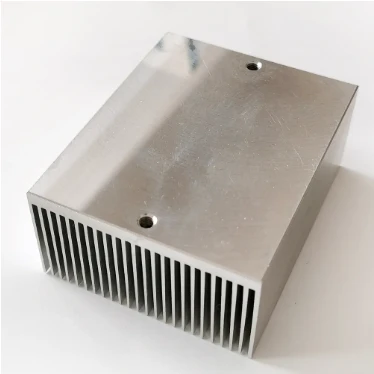

- Material Properties: The material of the heat sink plays a significant role in determining its thermal resistance. Metals such as aluminum and copper are commonly used in heat sink manufacturing due to their high thermal conductivity. Aluminum is a popular choice because it is lightweight, cost - effective, and has good thermal properties. You can learn more about Aluminum Heatsink on our website. Copper has even higher thermal conductivity than aluminum but is more expensive and heavier.
- Surface Area: The surface area of a round heat sink is directly related to its ability to dissipate heat. A larger surface area allows for more heat transfer to the surrounding air. Round heat sinks often have fins or other protrusions to increase their surface area. The more fins and the greater their height and density, the larger the surface area available for heat transfer, and the lower the thermal resistance.
- Fin Design: The design of the fins on a round heat sink can have a significant impact on its thermal performance. Factors such as fin thickness, spacing, and shape affect the airflow around the fins and the heat transfer coefficient. For example, well - spaced fins allow for better airflow, which enhances heat transfer. Some advanced fin designs use micro - channels or pin fins to further improve heat dissipation.
- Airflow: The amount and direction of airflow around the round heat sink are critical. Natural convection occurs when heat causes the air around the heat sink to rise, creating a flow of air. However, forced convection, which is achieved using fans, can significantly reduce the thermal resistance. By increasing the speed of the air flowing over the heat sink, more heat can be carried away from the surface, resulting in a lower temperature difference and thus lower thermal resistance.
Importance of Thermal Resistance in Different Applications
The thermal resistance of round heat sinks is of utmost importance in various industries and applications.
- Electronics: In electronic devices, such as computers, smartphones, and servers, heat generation is a major concern. Excessive heat can cause components to malfunction or reduce their lifespan. Round heat sinks with low thermal resistance are used to keep these components cool. For example, in a computer CPU, a round heat sink helps dissipate the heat generated by the processor, ensuring stable performance. You can explore more about Electronic Heat Sink for different electronic applications on our site.
- Power Electronics: Power electronic devices, like inverters and converters, generate a large amount of heat during operation. A heat sink with appropriate thermal resistance is essential to maintain the efficiency and reliability of these devices. Round heat sinks can be customized to fit the specific requirements of power electronics, providing effective cooling solutions.
- Bitcoin Mining: Bitcoin mining involves high - power computing, which generates a significant amount of heat. Aluminum Heat Sink For Bitcoin Miner is designed to handle the heat generated by the mining equipment. Low - thermal - resistance heat sinks are crucial in this application to prevent overheating and ensure continuous operation of the mining rigs.
Measuring and Testing the Thermal Resistance of Round Heat Sinks
To ensure the quality and performance of round heat sinks, accurate measurement and testing of thermal resistance are necessary. There are several methods for measuring thermal resistance.
- Thermocouple Method: This is a common method where thermocouples are used to measure the temperature at different points on the heat sink and the heat source. By applying a known amount of heat and measuring the temperature difference, the thermal resistance can be calculated using the formula R = ΔT / Q.
- Calorimetric Method: In this method, the heat transfer rate is measured by measuring the amount of heat absorbed by a coolant (such as water) flowing through a heat exchanger connected to the heat sink. The temperature difference between the inlet and outlet of the coolant is used to calculate the heat transfer rate, and then the thermal resistance is determined.
Selecting the Right Round Heat Sink Based on Thermal Resistance
When selecting a round heat sink for a particular application, it is essential to consider the required thermal resistance. Here are some steps to follow:
- Determine the Heat Dissipation Requirement: First, calculate the amount of heat that needs to be dissipated by the heat source. This can be done by referring to the datasheet of the electronic component or by measuring the power consumption of the device.
- Estimate the Allowable Temperature Rise: Based on the operating temperature limits of the component, determine the maximum allowable temperature rise above the ambient temperature.
- Calculate the Required Thermal Resistance: Using the formula R = ΔT / Q, calculate the required thermal resistance of the heat sink.
- Consider Other Factors: In addition to thermal resistance, consider other factors such as size, weight, cost, and compatibility with the application.
Conclusion
In conclusion, thermal resistance is a critical parameter for round heat sinks. It determines the ability of a heat sink to dissipate heat effectively and maintain the temperature of the heat source within acceptable limits. As a round heat sink supplier, we understand the importance of providing high - quality heat sinks with low thermal resistance. By considering factors such as material properties, surface area, fin design, and airflow, we can design and manufacture round heat sinks that meet the specific requirements of various applications.
If you are in need of a round heat sink for your project, whether it's for electronics, power electronics, or bitcoin mining, we are here to help. Our team of experts can assist you in selecting the right heat sink based on your thermal resistance requirements. Feel free to contact us for more information and to start a procurement discussion.
References
- Incropera, F. P., & DeWitt, D. P. (2002). Fundamentals of Heat and Mass Transfer. Wiley.
- Kreith, F., & Bohn, M. S. (2001). Principles of Heat Transfer. Cengage Learning.